Deliveroo's Quiet AI Revolution: How Voice Agents Are Running the Network
Deliveroo is deploying AI voice agents across its operations — re-engaging lapsed rider applicants, verifying restaurant status in real time, and accelerating partner onboarding. The results across three pilots reveal what intelligent automation looks like when it actually works at scale.
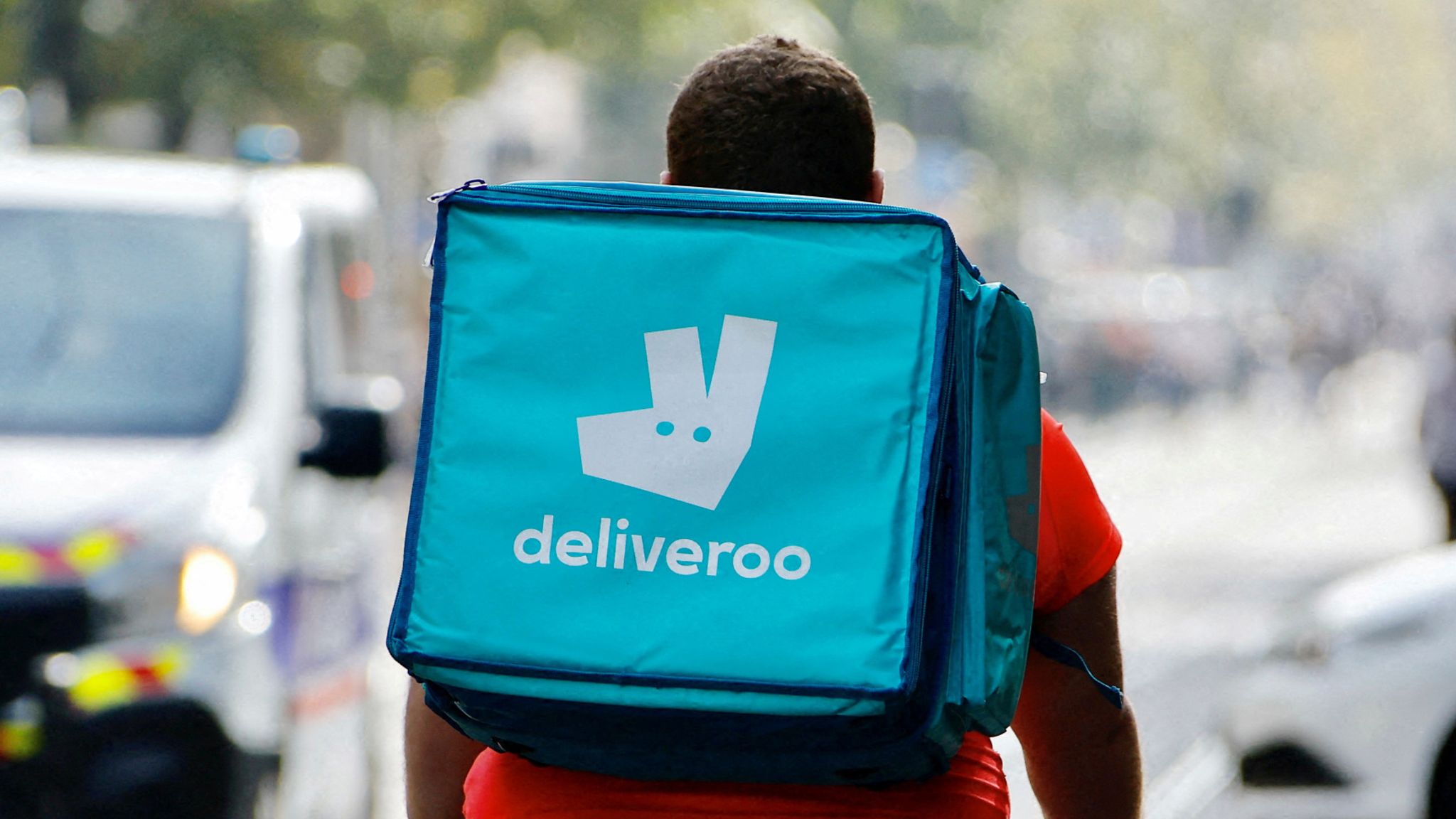
Operating one of Europe's largest on-demand delivery networks — with millions of consumers and more than 176,000 local business partners — Deliveroo is using AI voice agents to solve some of its most persistent operational challenges at scale.
Deliveroo's mission has always been ambitious: transform the way people shop and eat by seamlessly connecting consumers, restaurants, shops, and riders. But as that network grows across multiple markets and languages, so does the complexity of keeping every node of it humming efficiently. To meet that challenge without proportionally scaling headcount, Deliveroo has turned to AI-powered voice agents — and the early results are striking.
Bringing Riders Back into the Fold
Rider onboarding is a multi-step process involving verification, documentation, and training — and Deliveroo found that a meaningful share of applicants were quietly dropping off before reaching the finish line. Traditional follow-up was slow, inconsistent across regions, and demanded considerable time from local operations teams.
To address the bottleneck, Deliveroo deployed an AI voice agent to automatically contact rider applicants who had been inactive for more than two weeks. The agent confirmed whether applicants still intended to complete their onboarding and walked them through the next steps — in their preferred language.
The results were immediate. The agent reached the vast majority of the target cohort by phone or voicemail within hours rather than the days or weeks a human team would require. More meaningfully, 30% of riders who received the call confirmed their intent to continue and completed their application within seven days. Local operations teams, freed from repetitive outreach, could redirect their attention to edge cases requiring genuinely human judgment.
Keeping Restaurants Open for Business
Across Deliveroo's network, maintaining accurate live status data for every restaurant partner is mission-critical — both for delivering a reliable consumer experience and for efficiently allocating riders. But confirming whether a restaurant flagged as "closed" by a rider is actually operational required Deliveroo's support teams to make thousands of calls every single week.
Deliveroo replaced that manual loop with an AI voice agent that places outbound calls to flagged restaurants, validates their opening hours, and updates Deliveroo's internal systems in real time. The agent achieved a 75% success rate in reaching restaurant contacts by phone — eliminating the need for thousands of manual check-ins and enabling near-continuous network monitoring at a fraction of the previous cost.
"AI has transformed our operational efficiency, giving us real-time visibility into network status and helping our partners confirm their live status." — Deliveroo Operations Team
Activating the Rider Check-In Tag
Deliveroo's Rider Check-In (RCI) tags are a key tool for streamlining order handover between restaurants and riders — but driving adoption among new partner sites proved to be a slow, manual effort. After a successful implementation window, many sites had still not activated their tags.
Deliveroo deployed another AI voice agent to proactively contact sites that hadn't activated their tags within five business days, guiding managers through the installation and activation steps directly over the phone. The agent successfully reached 86% of partner sites in early results — a contact rate that would be difficult to sustain with a human-led calling programme at the same scale.
The downstream effect was equally important: faster tag activation means smoother handovers, which means more reliable deliveries for consumers.
Results at a Glance
>80% of riders reached
Re-engagement contact rate for lapsed rider applicants
75% of restaurants verified
Live status confirmed via automated outbound calls
86% of partner sites reached
RCI tag activation contact rate across new restaurant partners
What This Signals for the Industry
What makes Deliveroo's approach noteworthy isn't just the numbers — it's the breadth of problems being addressed. From supply-side onboarding to real-time operational verification to partner tooling adoption, AI voice agents are now covering terrain that once required large, regionally-distributed teams.
The common thread is repetitive, high-volume communication that benefits from speed and consistency but doesn't require human creativity or relationship-building. AI agents handle the throughput; human teams handle the nuance. That division of labour, when executed well, is proving to be a genuine competitive advantage.
For a network operating at Deliveroo's scale — and with ambitions to grow further — the ability to deploy intelligent automation quickly and reliably isn't a nice-to-have. It's becoming infrastructure.
Deliveroo's playbook is a useful reference for any enterprise evaluating voice AI agents for operations at meaningful scale.